
Safari of a Lifetime?
With years of experience in Tanzania tours, our team will guide you on the best parks, seasons, and itineraries.
Call us now for honest advice and a free, no obligation quote.
- Duration: 7 Day - 6 Night
- Language: English | Swahili
- Max People: 40
The 7-Day Lemosho Route is a spectacular journey to the summit of Mount Kilimanjaro (5,895 m), Africa’s highest mountain. Approaching from Kilimanjaro’s remote western slopes, this route takes trekkers through pristine rainforest, open moorland, the expansive Shira Plateau and dramatic alpine landscapes before joining the southern circuit toward the summit. Lemosho is particularly appealing to climbers who want a quieter beginning, varied scenery and an immersive mountain experience. The seven-day version offers a gradual start across the western slopes, but remains a demanding itinerary with limited recovery time during the final ascent. An eight-day version is worth considering for additional acclimatization.
- Professional porters
- All meals during the trek
- Experienced mountain guides
- Park entrance and crater fees
- Kilimanjaro National Park permit
- Camping equipment (tents, sleeping bags)
- Accommodation Quality, waterproof, four-season private Mountain sleeping tents:(huts or tents)
- Travel insurance
- Personal expenses
- Tips and gratuities
- Departure transfers
- International flights
- Medical evacuation insurance
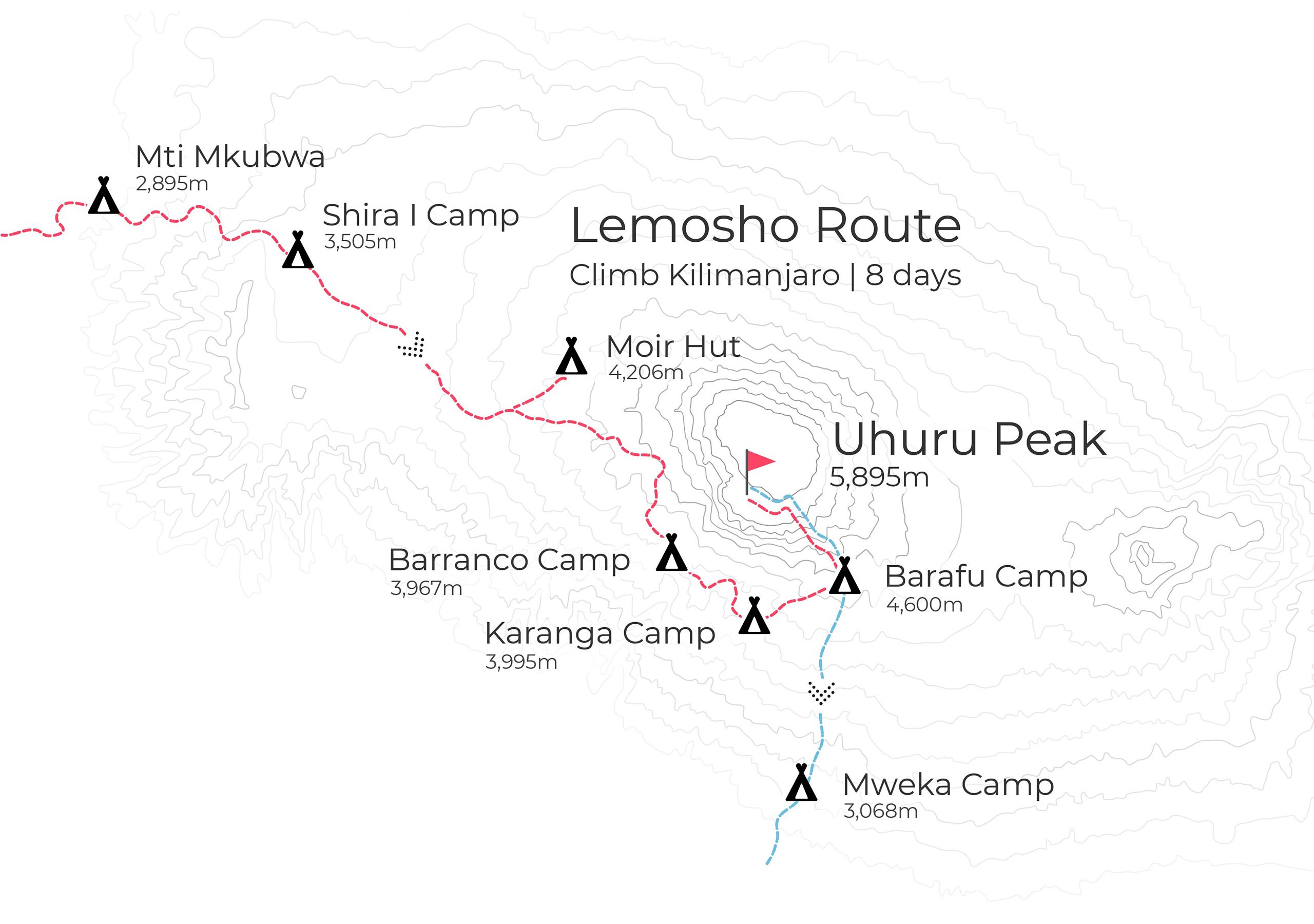
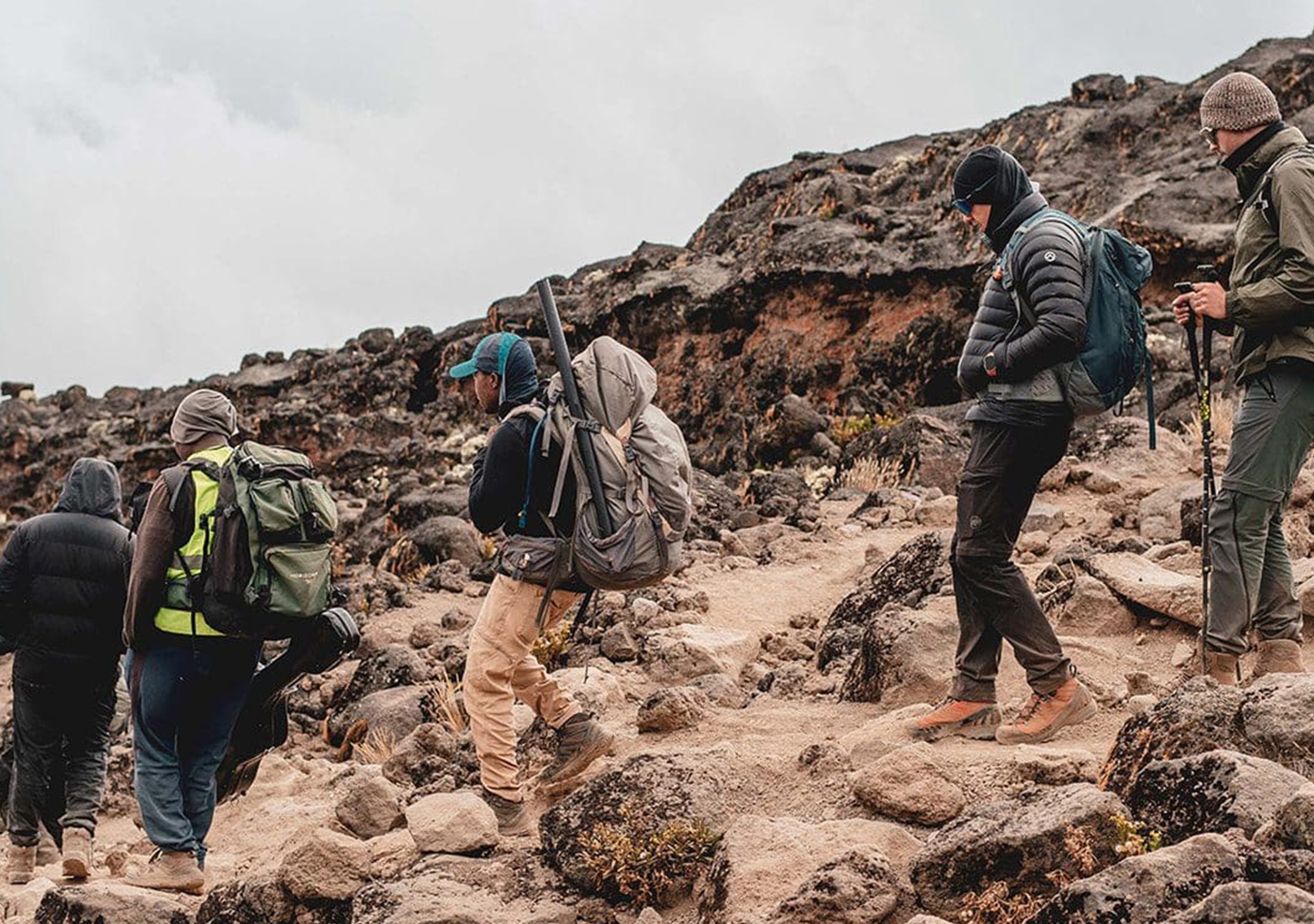
Your adventure begins with a morning transfer from your hotel in Moshi or Arusha to Londorossi Gate on Kilimanjaro’s western side. After registration and meeting your mountain crew, continue to the trailhead, where your trek begins. Walk beneath towering trees, through lush vegetation and along forest paths rich in birdlife. The western approach often feels remote and peaceful, offering a memorable introduction to Kilimanjaro’s natural environment. Arrive at Mti Mkubwa, meaning “Big Tree” in Swahili, where your crew prepares camp and a warm dinner. Enjoy the forest atmosphere and rest before the next day's ascent.
Elevation: 2,100m to 2,780m
Distance: Approximately 6 km
Trekking Time: 3–4 hours
Habitat: Rainforest
After breakfast, continue climbing as the dense rainforest gradually gives way to heathland and moorland. The vegetation becomes shorter, the terrain more open and the views increasingly expansive. The trail crosses rolling hills, rocky sections and small streams as it approaches the Shira Plateau. On clear days, the mountain’s enormous volcanic slopes begin to dominate the horizon, offering a first glimpse of the high-altitude scenery ahead. Reach Shira 1 Camp and settle into your tent. Your guide will monitor how you are responding to the elevation gain and encourage a slow walking pace, regular hydration and an early night.
Overnight: Shira 1 Camp.
Elevation: 2,780m to 3,505m
Distance: Approximately 8 km
Trekking Time: 5–6 hours
Habitat: Rainforest to Moorland
Today’s trek crosses the beautiful Shira Plateau, one of the defining highlights of the Lemosho Route. Compared with the previous day, the terrain is generally more open, allowing you to appreciate the vastness of the landscape and the changing colors of the volcanic ground. Walk through rolling moorland with scattered giant plants and striking rock formations. Kibo’s summit rises ahead, while Mount Meru may be visible in the distance when the weather is clear. This stage gives you time to settle into the mountain rhythm before the more demanding days ahead. On arrival at Shira 2 Camp, enjoy lunch or a hot drink, relax at camp and prepare for the next day's higher-altitude trek.
Overnight: Shira 2 Camp.
Elevation: 3,505m to 4,200m
Distance: Approximately 11 km
Trekking Time: 5–7 hours
Habitat: Moorland to Alpine Desert
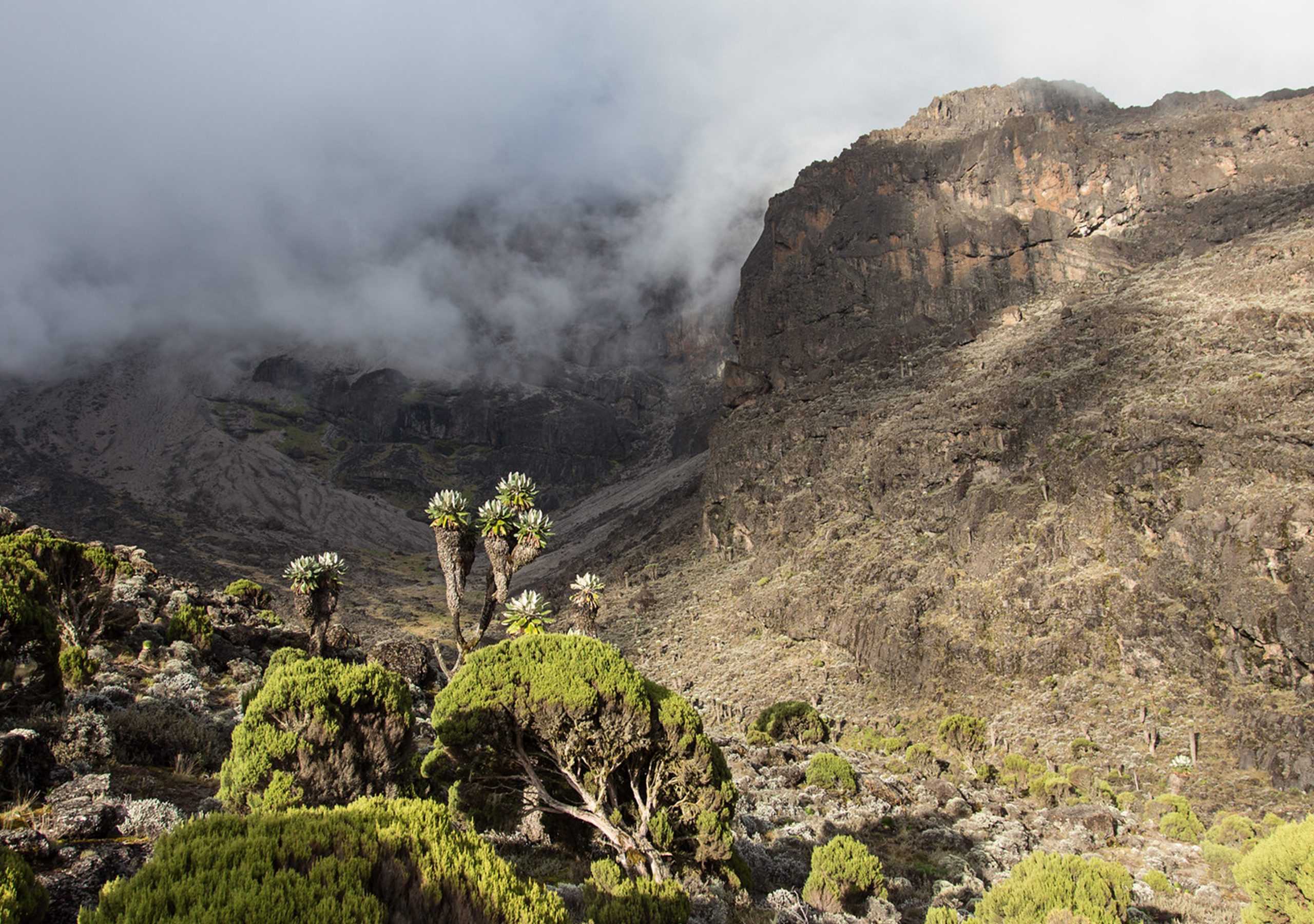
Leave the Shira Plateau and trek east toward the towering slopes of Kibo. As you climb, the landscape becomes increasingly rugged and sparse, with volcanic rock and hardy alpine vegetation replacing the greener scenery of the lower mountain. The route leads toward Lava Tower, a dramatic volcanic formation that marks one of the trek’s key acclimatization stages. Pause for lunch and allow your guide to assess the group before beginning the descent. Continue downhill into the Barranco Valley, where giant groundsels and steep mountain walls create a striking landscape. Reaching camp at a lower elevation after climbing higher during the day demonstrates the “climb high, sleep low” principle, which can help with acclimatization.
Overnight: Barranco Camp.
Elevation: 4,200m to 4,630m to 3,960m
Distance: Approximately 12 km
Trekking Time: 6–8 hours
Habitat: Alpine Desert
Begin with the famous Barranco Wall, a steep and memorable section of the trail where careful foot placement and occasional hand-supported scrambling are needed. Although it looks imposing from camp, it is generally a non-technical hiking section when conditions are suitable and guides provide direction. At the top, enjoy panoramic views across the mountain’s southern slopes before continuing toward Karanga Valley. The trail rises and falls over rocky terrain, making this a physically demanding stage. From Karanga, continue toward Barafu Camp, the principal base for the summit attempt. This itinerary combines the Karanga and Barafu stages into one long day, so pacing, hydration and following your guide’s instructions are especially important. At Barafu, eat an early dinner, organize your warm clothing and headlamp, and prepare your summit equipment. You will usually rest in the evening before beginning the summit attempt around midnight.
Overnight: Barafu Camp.
Elevation: 3,960m to 4,035m
Distance: Approximately 7 km
Trekking Time: 4–5 hours
Habitat: Alpine Desert
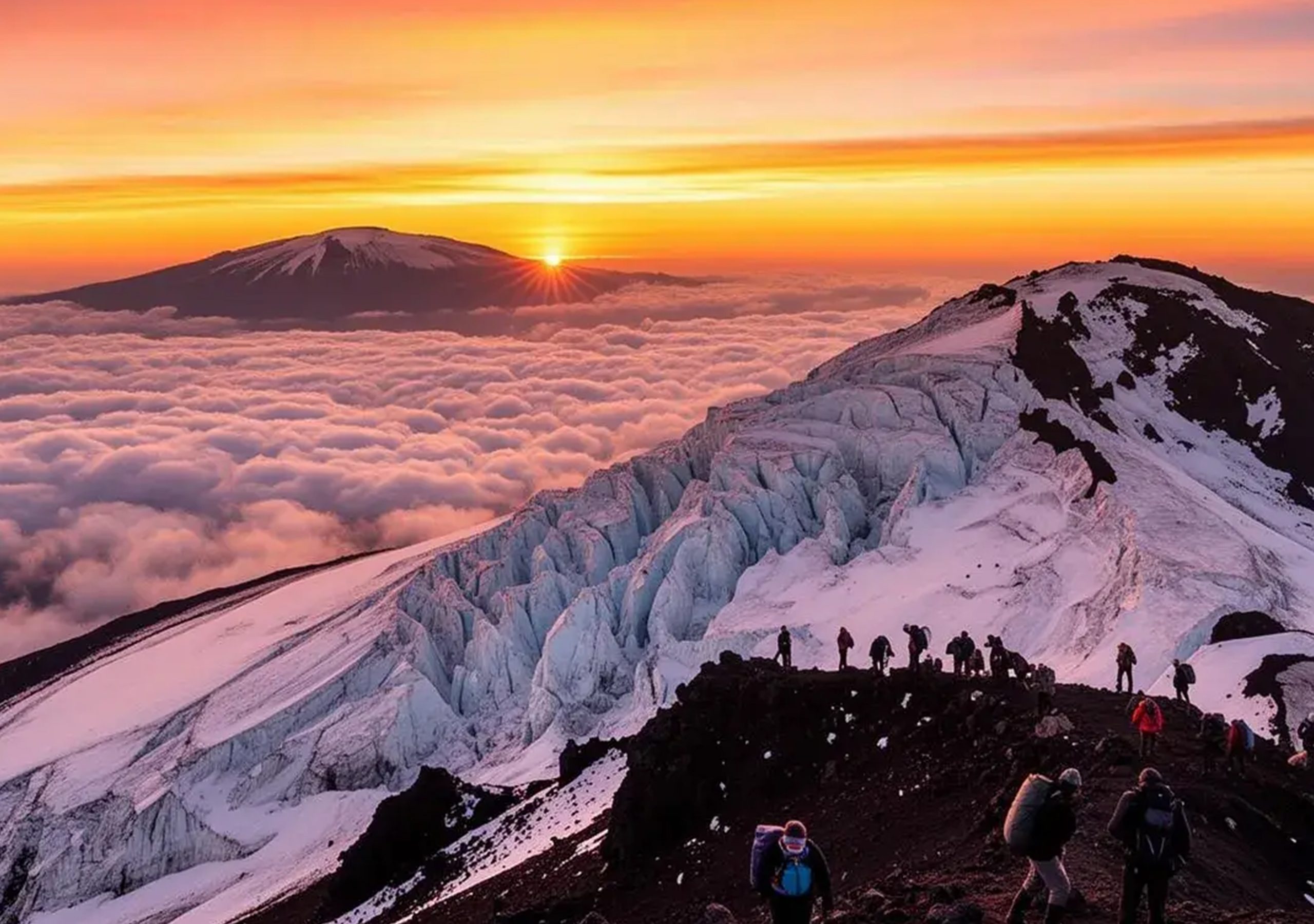
Your summit attempt begins in the darkness, typically around midnight. Guided by headlamps, climb slowly across volcanic scree toward Stella Point on the crater rim, approximately 5,756 m above sea level. This is the most demanding stage of the climb. The combination of steep terrain, freezing temperatures, fatigue and low oxygen makes a slow, steady pace essential. Your guide will monitor your condition and may turn you around if symptoms or conditions make continuing unsafe. From Stella Point, continue along the crater rim toward Uhuru Peak, at 5,895 metres. If weather permits, the sunrise over Kilimanjaro’s glaciers and surrounding landscape creates an unforgettable moment at the highest point in Africa. After celebrating and taking photographs, begin the long descent. Return toward Barafu for a short rest before continuing to Mweka Camp. Trekking poles are valuable on the loose scree and steep downhill sections.
Overnight: Mweka Camp.
Elevation: 4,640m to 5,895m to 3,080m
Distance: Approximately 15–17 km
Trekking Time: 12–15 hours
Habitat: Arctic to Alpine Desert to Rainforest
With years of experience in Tanzania tours, our team will guide you on the best parks, seasons, and itineraries.
Call us now for honest advice and a free, no obligation quote.