
- Home
- Mt. Trekking
- Mount Kilimanjaro
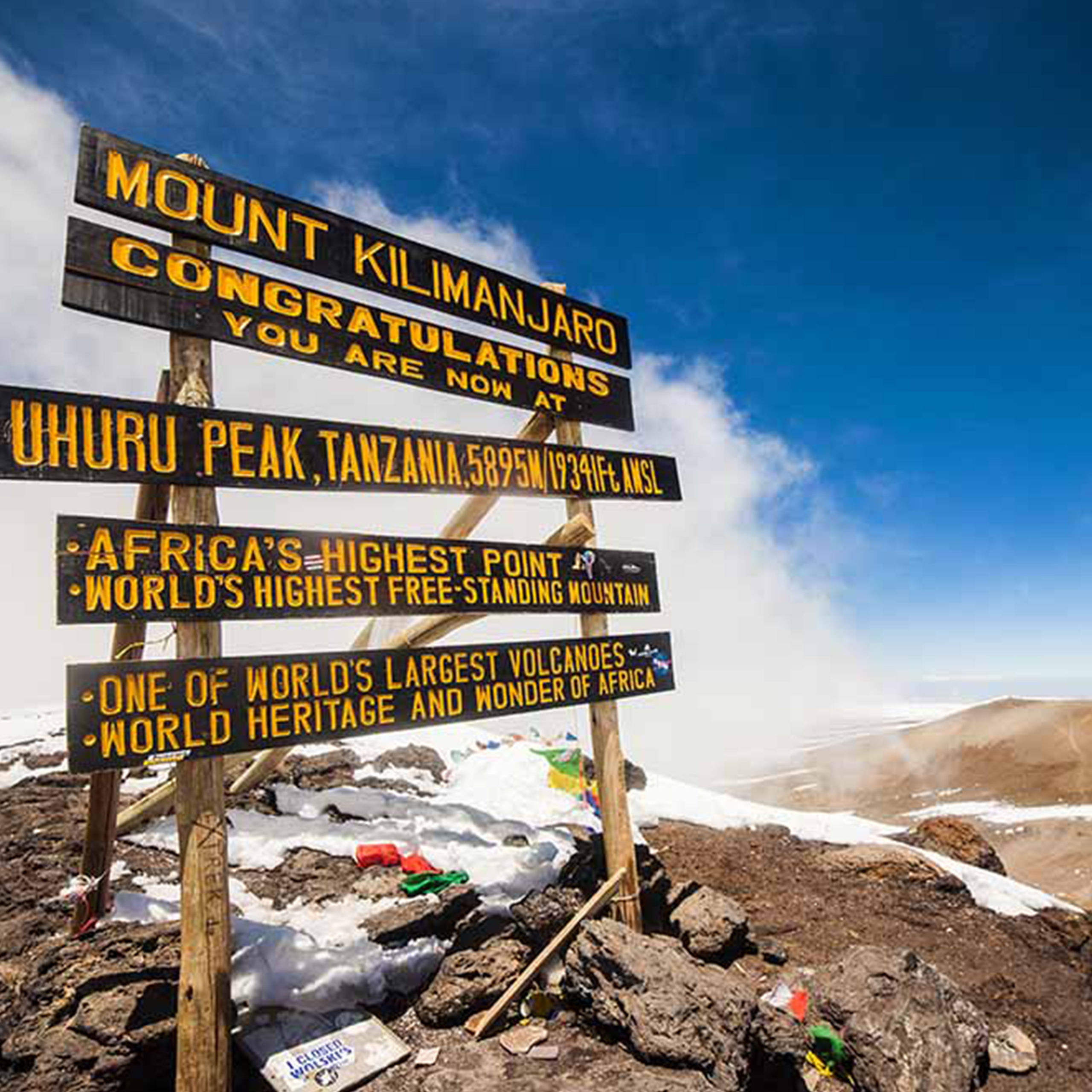
The mountain is a huge freestanding lump of lava rising from the surrounding plains at 900m to almost 6000m. It was an active volcano, but fortunately for climbers it has been resting for thousands of years. Although Mount Kilimanjaro lies about 330 km south of the equator, it is topped with a lovely layer of snow and glaciers. According to UNESCO reports the mountain has lost 82% of its ice cap since 1912 and 55% of its glaciers since 1962. Kilimanjaro formed after volcanic eruptions millions of years ago when three volcanic cones were built out of these eruptions: Shira, Mawenzi and Kibo. Shira (3962m) has been eroded to a lava plateau and Mawenzi (5149m) is now a jagged heap of volcanic rock, but lava has formed a ‘saddle’ between Mawenzi and Kibo. The group name for this mass of lava and its three ‘peaks’ is Mount Kilimanjaro. Uhuru peak is the highest the point on the Kibo crater and the highest point in Africa at 5895m above sea level.
Mount Kilimanjaro, rising to 5,895 meters above sea level, offers one of Africa’s most memorable trekking experiences. The ascent takes travelers through several ecological zones, from cultivated foothills and montane rainforest to heathland, alpine desert, and the high-altitude summit landscape. There are 6 routes that are fully approved for the hike of Mt Kilimanjaro to reach to the peak of Uhuru. Each route offers different scenic views of nature that comes with its own advantages and disadvantages. Regardless of the route the guest chooses one has to be well prepared for the great challenge of the mountain. One has to be fit enough, well prepared mentally for the hike and equipped with all the basic and necessary equipment for hiking.
What Makes Mount Kilimanjaro Special?
At 5,895 meters, Uhuru Peak is the highest point in Africa. Standing at the summit is an extraordinary achievement that rewards climbers with sweeping views, a profound sense of accomplishment and memories that last a lifetime.
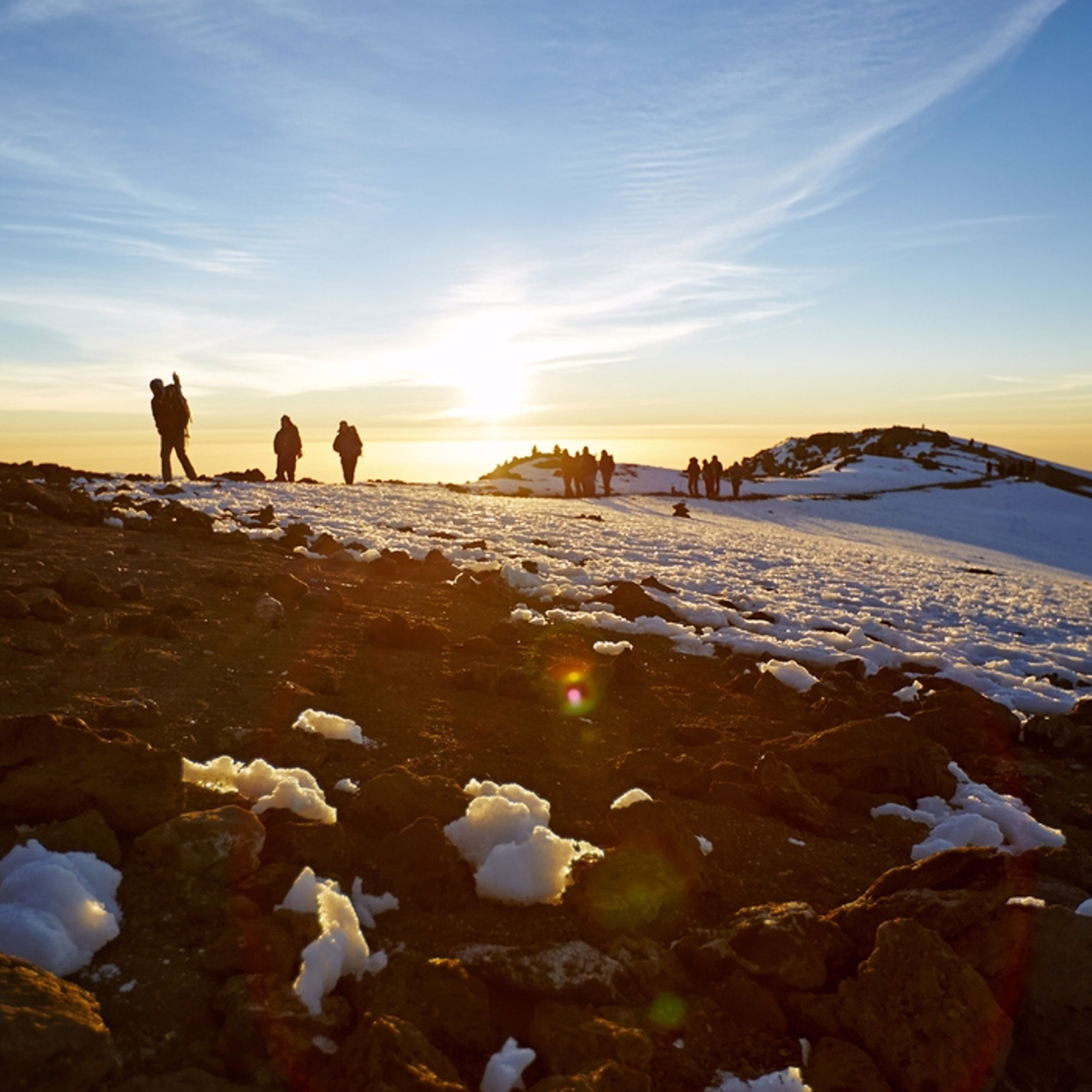
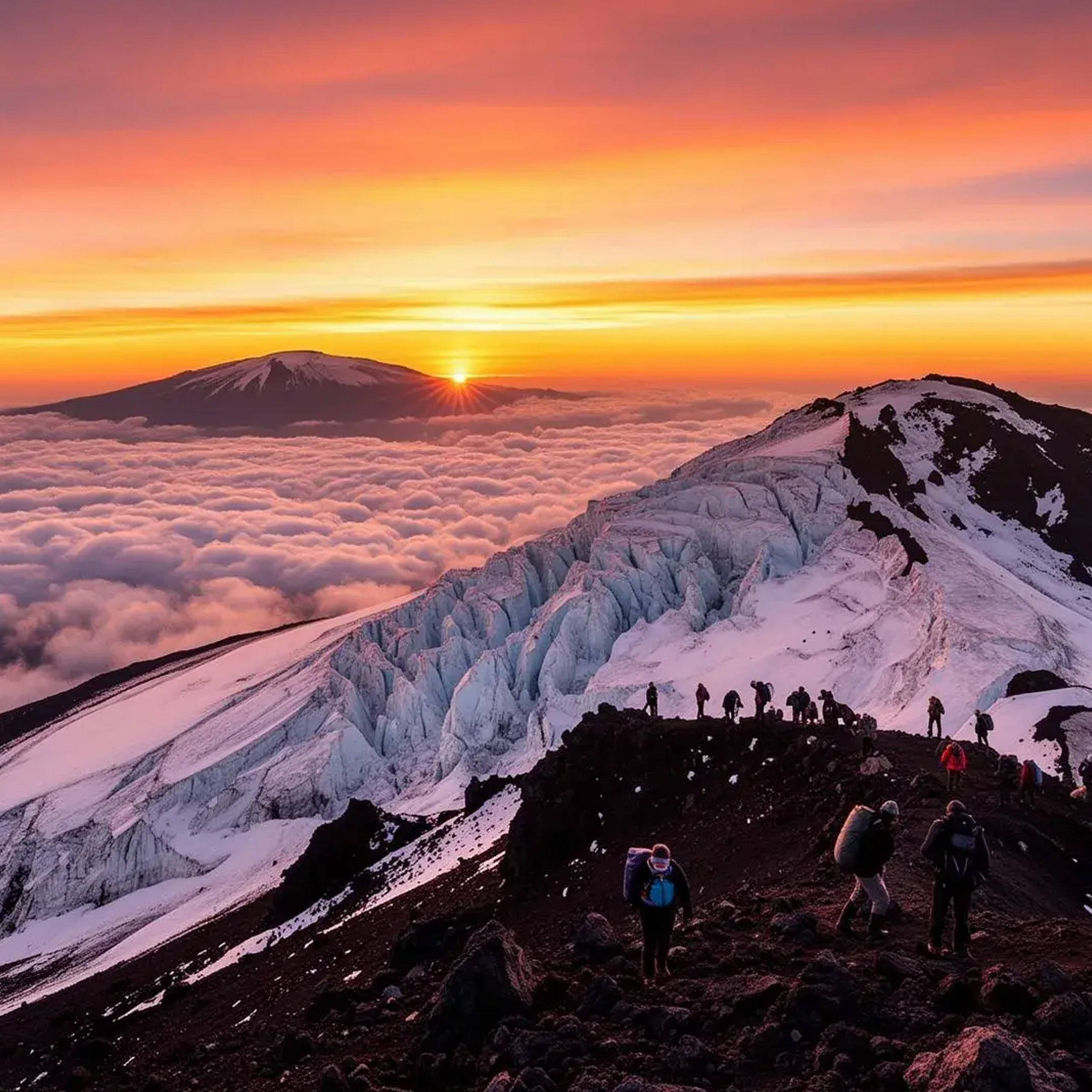
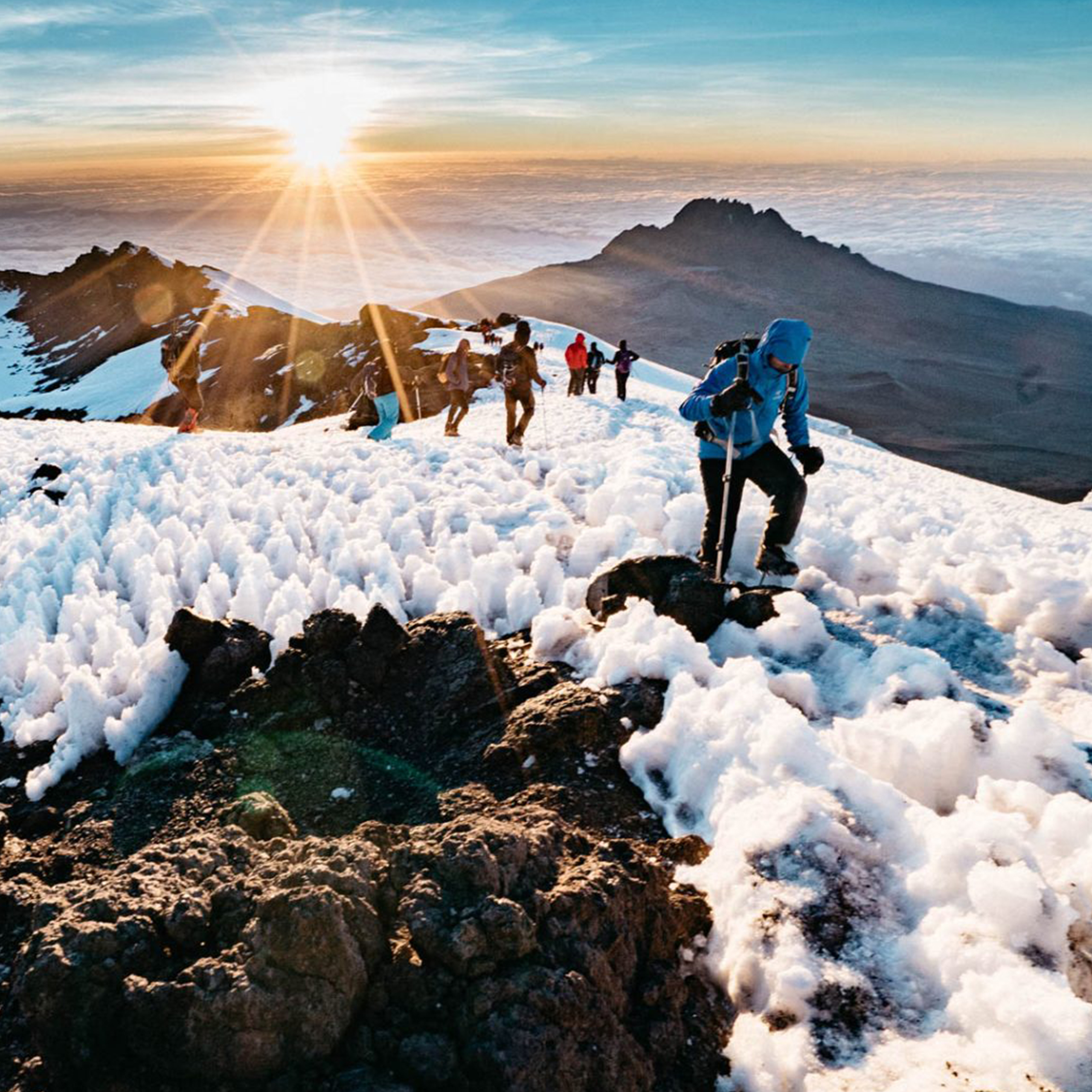
The final ascent usually begins during the night, as trekkers make their way towards the summit beneath a sky filled with stars. As dawn approaches, the horizon begins to glow, revealing the immense scale and beauty of the African landscape.
Reaching Uhuru Peak requires determination, patience and careful acclimatization. Although no technical climbing skills are normally required on standard trekking routes, the altitude makes Kilimanjaro a serious physical challenge.
One of Kilimanjaro’s most fascinating characteristics is the dramatic transformation of its environment as you ascend.
Cultivated foothills: Farms, villages and lush landscapes surround the lower slopes.
Montane rainforest: towering trees, moss-covered branches, rich vegetation and birdlife create a cool, atmospheric environment.
Heath and moorland: Giant heather, unusual plants and open mountain scenery dominate the middle elevations.
Alpine desert: The landscape becomes rocky, dry and exposed, with striking volcanic formations.
Arctic summit zone: Near the top, temperatures can fall below freezing, with ice, snow and glaciers creating a remarkable high-altitude environment.
This extraordinary progression allows trekkers to experience an exceptional variety of ecosystems during a single mountain expedition.
Mount Kilimanjaro offers a constantly changing panorama throughout the climb. Forest trails give way to broad mountain ridges, dramatic valleys, volcanic rock formations and vast open plateaus.
Depending on the route and weather, trekkers may enjoy views of the Shira Plateau, the distinctive Barranco Wall, the volcanic landscape surrounding Kibo and the immense crater formations near the summit.
On clear days, the mountain provides unforgettable views across the plains of Tanzania and towards neighboring Kenya.
Mount Kilimanjaro is a volcanic massif made up of three main volcanic cones: Kibo, Mawenzi and Shira.
Kibo is the highest and central cone, containing the summit area and crater. Mawenzi is known for its rugged, jagged peaks, while Shira forms an older volcanic landscape that has been heavily eroded over time.
Although Kilimanjaro is classified as a dormant volcano, its geological history continues to shape the mountain’s distinctive scenery and makes it an especially fascinating destination for nature lovers and geology enthusiasts.
Climbing Kilimanjaro is not simply about reaching a particular altitude. It is a journey of preparation, perseverance and discovery.
Each day brings new terrain, new challenges and opportunities to appreciate the mountain at a different pace. The encouragement of your guides and fellow trekkers becomes especially valuable during the demanding summit attempt.
Whether you reach Uhuru Peak or need to turn back for safety, the experience offers a meaningful opportunity to challenge yourself and explore one of Africa’s greatest natural landmarks.
How To Get There?
Travelling by road is an excellent way to reach Mount Kilimanjaro, especially for visitors already exploring northern Tanzania. The journey passes through scenic countryside, local villages and agricultural landscapes, with opportunities to enjoy views of the mountain on clear days.
From Moshi:
Moshi is the principal base for many Kilimanjaro climbs. From town, climbers can transfer to their selected trailhead.
From Arusha:
Travelers can drive to Moshi or arrange a direct transfer to their designated climbing gate, depending on the route.
From Dar es Salaam:
Visitors can travel by domestic flight or make the longer journey north by road.
From Nairobi, Kenya:
International travellers can travel by road through the appropriate border crossing or connect by air, depending on their itinerary.
Kilimanjaro International Airport (JRO)
Kilimanjaro International Airport is the primary gateway for travelers visiting Mount Kilimanjaro. Situated between Arusha and Moshi, it offers convenient access to the mountain’s principal climbing routes and nearby accommodation.
International visitors can connect to JRO through regional and international flight hubs, depending on their departure city and airline. Upon arrival, a pre-arranged airport transfer can take you to Moshi, Arusha, or your chosen hotel, where you can prepare for the climb.
Arusha Airport (ARK)
Arusha Airport mainly serves domestic and regional charter flights. It can be useful for travelers arriving from other destinations within Tanzania, particularly those combining a Kilimanjaro climb with a safari in the northern circuit.
From Arusha, you can arrange a road transfer to Moshi or travel directly to your designated climbing gate, depending on your itinerary and the route selected.
Machame Route (The Scenic Adventure)
The Machame Route is one of Kilimanjaro’s most popular trekking routes, celebrated for its dramatic scenery and varied terrain. Often called the Whiskey Route, it passes through rainforest, open moorland and alpine landscapes before joining the southern approach to the summit.
Its itinerary commonly includes the Barranco Wall and the Karanga Valley, with many packages using a climb-high, sleep-lower approach to support acclimatization.
Best for: Trekkers seeking diverse scenery and a challenging, rewarding climb.
Typical duration: 6–7 days, with longer itineraries often allowing more time for acclimatization.
Lemosho Route (The Beautiful Wilderness Approach)
The Lemosho Route begins on the western side of Kilimanjaro and is known for its beautiful forest scenery, quieter early trail sections and gradual approach across the mountain.
The route crosses the Shira Plateau before joining the southern circuit, providing expansive views and opportunities for a more gradual ascent on longer itineraries.
Best for: Trekkers who value scenery, a less hurried start and a longer acclimatization schedule.
Typical duration: 7–8 days.
Marangu Route (The Classic Hut Route)
The Marangu Route approaches Kilimanjaro from the southeast and follows a well-established trail through rainforest, moorland and alpine terrain.
It is the only standard Kilimanjaro route with hut accommodation throughout the ascent and descent, making it appealing to trekkers who prefer sleeping indoors rather than in mountain tents.
Its shorter itineraries, however, can provide less time for acclimatization.
Best for: Trekkers who prefer hut accommodation and a traditional route.
Typical duration: 5–6 days, with a longer itinerary generally preferable for acclimatization.
Northern Circuit Route (The Extended Expedition)
The Northern Circuit is the longest established trekking route on Kilimanjaro. Approaching from the west, it traverses the northern slopes and circles much of the mountain before joining the summit approach.
Its longer duration allows additional time at altitude and offers a quieter trekking experience across remote sections of the mountain.
Best for: Travelers who want a longer expedition, varied scenery and more time to acclimatize.
Typical duration: 8–9 days.
Rongai Route (The Northern Approach)
The Rongai Route approaches Kilimanjaro from the north, near the Kenyan border. It offers a different perspective from the more frequently used southern routes and passes through forest, moorland and high-altitude terrain.
The route is often considered for its quieter approach and the possibility of relatively dry conditions on the northern side, although weather varies throughout the mountain.
Best for: Trekkers seeking a northern approach and a different perspective of Kilimanjaro.
Typical duration: 6–7 days.
Umbwe Route (The Steep and Demanding Challenge)
The Umbwe Route is known for its steep initial ascent and demanding terrain. It rises rapidly through forest before joining the southern circuit near Barranco.
Because the route gains altitude quickly, it is generally better suited to experienced, physically prepared trekkers using an appropriately planned itinerary.
Best for: Experienced hikers seeking a demanding route and prepared for a steep ascent.
Typical duration: Commonly 6–7 days, depending on the itinerary.
Shira Route (The High-Altitude Western Approach)
The Shira Route begins on the western side of Kilimanjaro and crosses the Shira Plateau before joining the southern circuit. Its high starting elevation means trekkers may encounter altitude effects early in the journey.
A carefully selected itinerary is essential, particularly for travelers arriving directly from low altitude.
Best for: Trekkers seeking western-side scenery with a suitable acclimatization plan.
Mount Kilimanjaro can be climbed throughout much of the year, but certain periods generally offer more favourable trekking conditions.
January to early March:
Often a popular period for climbing, with opportunities for clearer views and generally favourable trekking conditions, although snow and cold temperatures are possible near the summit.
June to October:
A major climbing season, generally associated with drier conditions and good trekking opportunities. Trails can be busy during popular travel periods.
March to May:
The long rainy season can bring wet forest trails, muddy conditions and reduced visibility. Some trekkers still climb during this period, but preparation for rain is essential.
November to December:
The short rains can affect visibility and trail conditions. Trekking remains possible, although weather is variable.